
QUEENS
The Queens series is a vibrant tribute to women and Mother Nature, one where femininity and beauty intertwine with the vital forces of the natural world.
Primarily represented by women from the Middle East, with Queen Gaia being the exception, Cachoux focuses on the strength and courage of women. He celebrates their resilience and their ability to face and overcome adversity, even when the world around them changes in painful and destructive ways. For women, these qualities know no borders.
Through these female figures, who are different from one another, the artist conveys the complexity and multifaceted nature of the Middle East. This universe takes shape through a strong visual language that permeates the entire series, distinguished by its rich stylistic exploration and meticulous attention to detail. These references emerge not only through the presence of emblematic animals, but also through visual elements deeply connected to the cultural heritage of the regions they represent. A central motif appears in the patterns of Sadu Queen, whose name reflects the ancient Sadu weaving tradition, practised by the nomadic women of the desert. These patterns are reinterpreted through shades of red and, above all, blue, a colour particularly cherished by the artist.
Tenacity, adaptability and a powerful connection with nature are embodied throughout the series by symbolic animals, from the deer, traditionally associated with love in the Song of Songs, whose Arabic verses frame Karaz Queen, to the Palestinian partridge in Jerusalem Queen, which evokes a strong connection to the land, memory and Levantine culture. Across the world, women embody an ancestral and inseparable bond with the earth. They reflect the eternal cycle of life and nature itself, facing hardship with dignity, renewal with hope, and sustaining the future even in the most extreme situations.
These women are enveloped in an enigmatic aura; the same sense of wonder and mystery that can be glimpsed in the wide-eyed gaze of the owl depicted in Desert Queen. Who is she, in reality? Why does she wear traditional male Gulf attire? Through these visual ambiguities, Cachoux invites us to question identity, social roles and contemporary cultural transformations.
The Queens series transcends cultural and geographical differences. It evokes a world marked by exile, climate change and imminent rebirth, reminding us that women share common experiences and values. Their ability to create and nurture reflects the generosity of nature itself, a source of life and regeneration. Their collective strength invites us to rediscover what unites us beyond cultural differences, opening the path towards a more conscious and sustainable future.
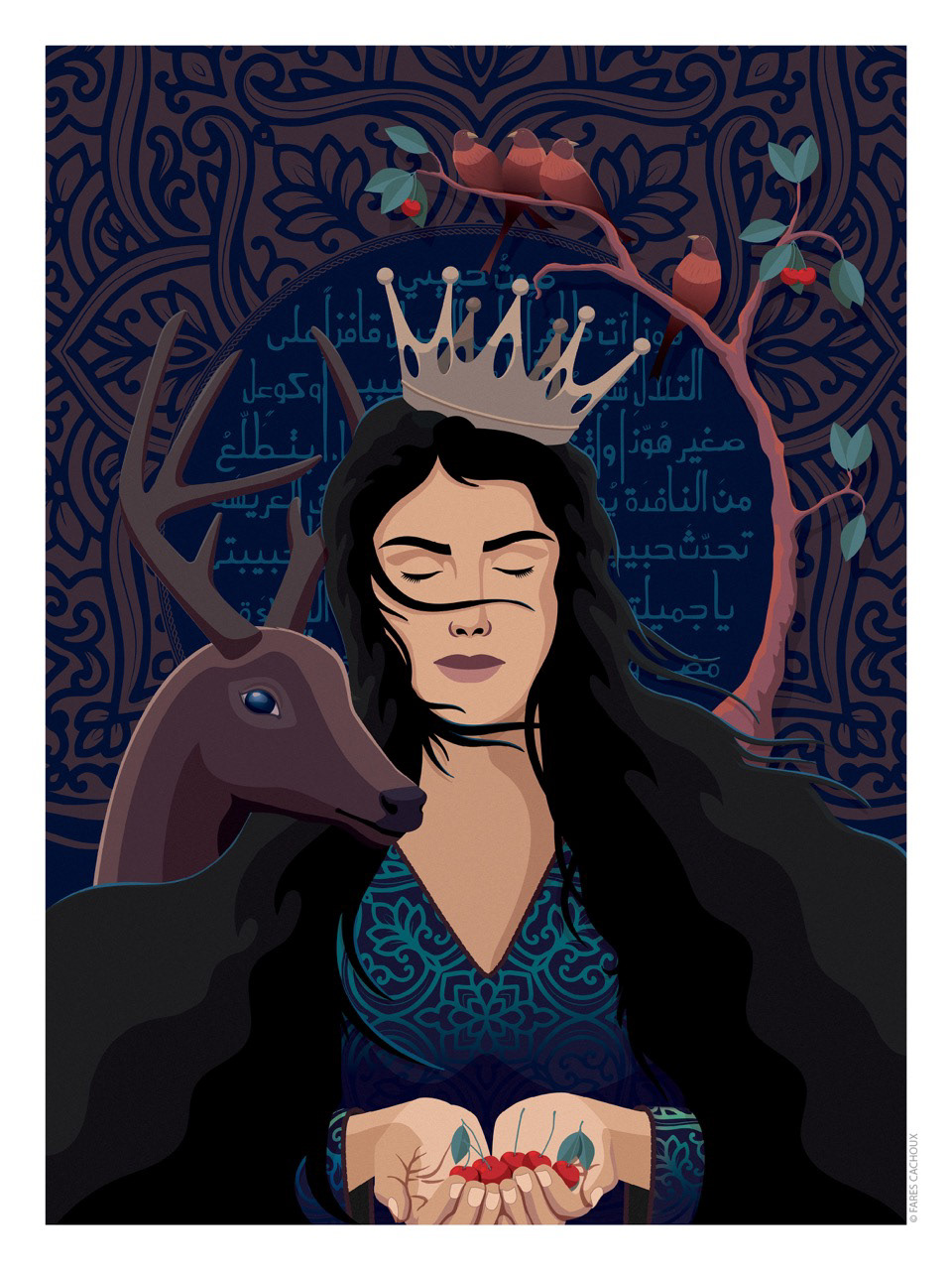
Karaz Queen
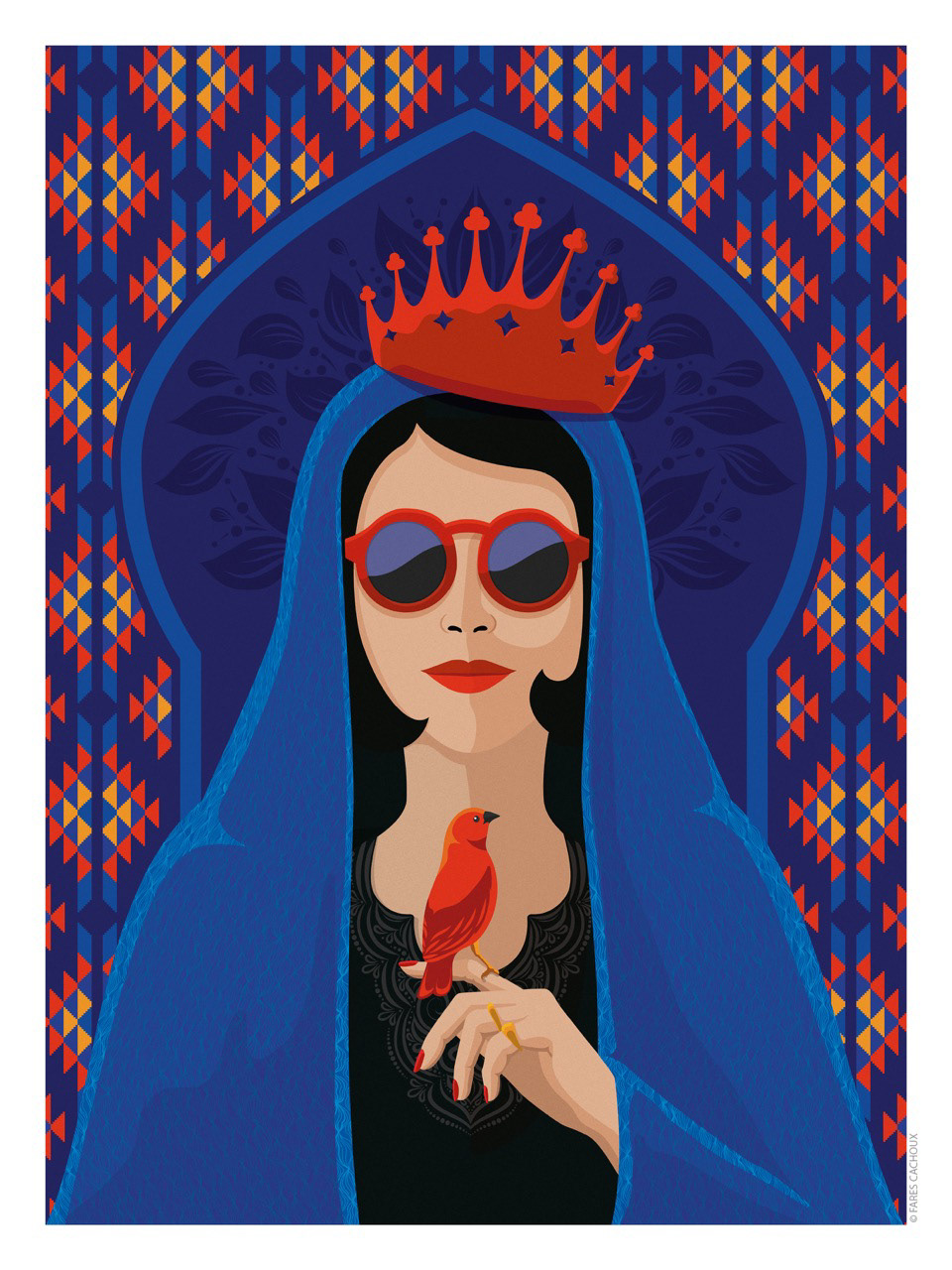
Sadu Queen
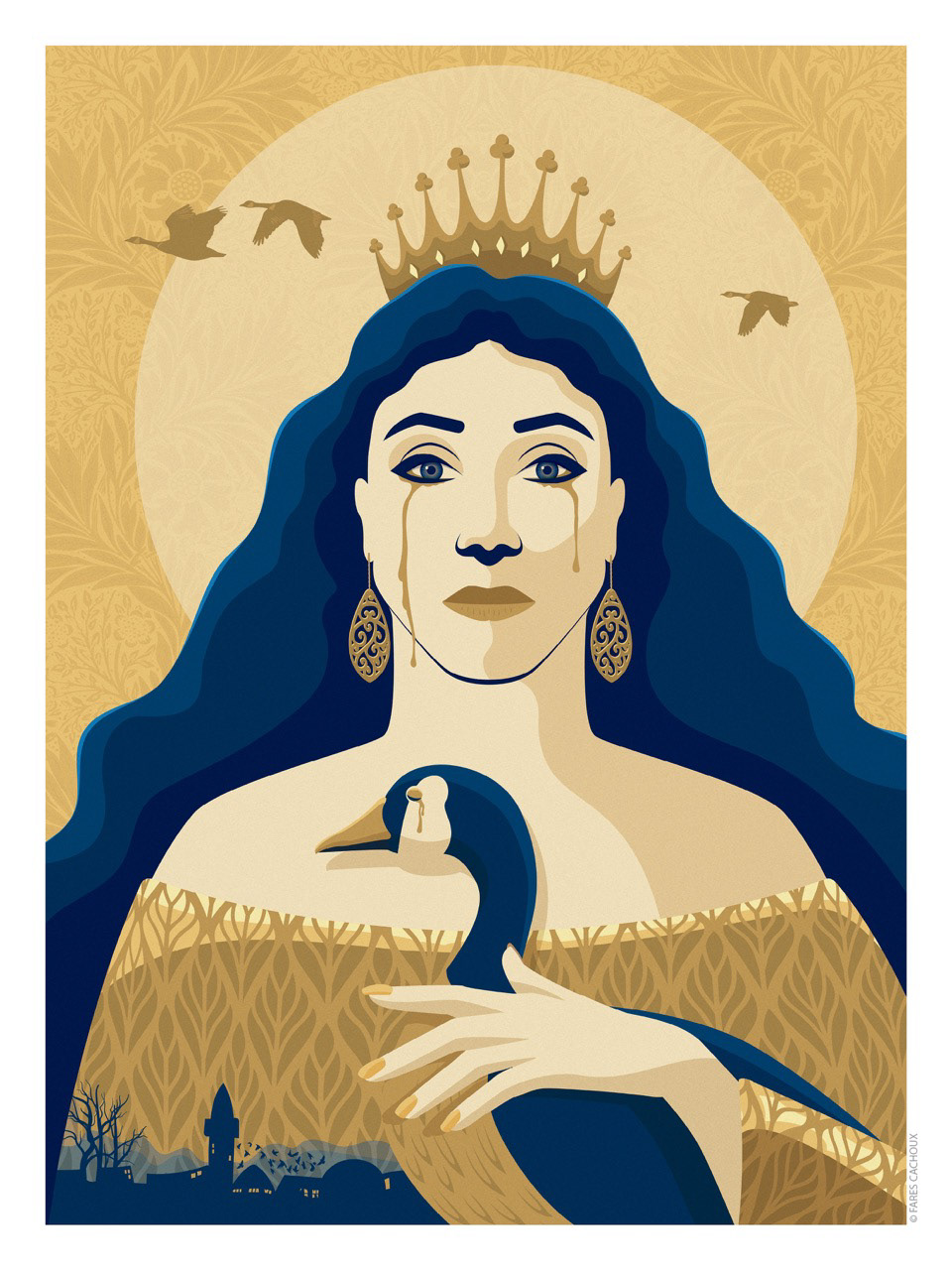
Crying Queen
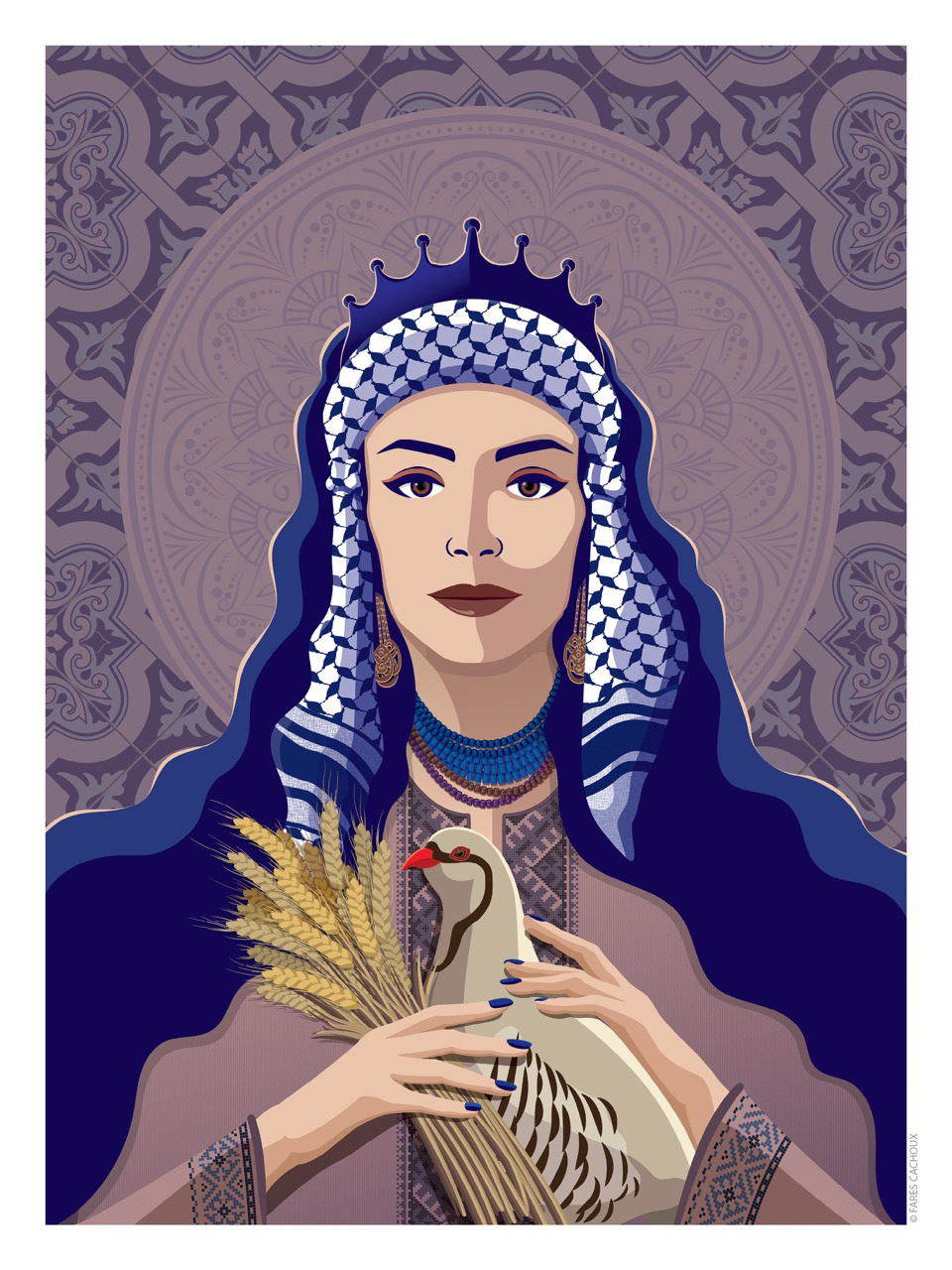
Jerusalem Queen
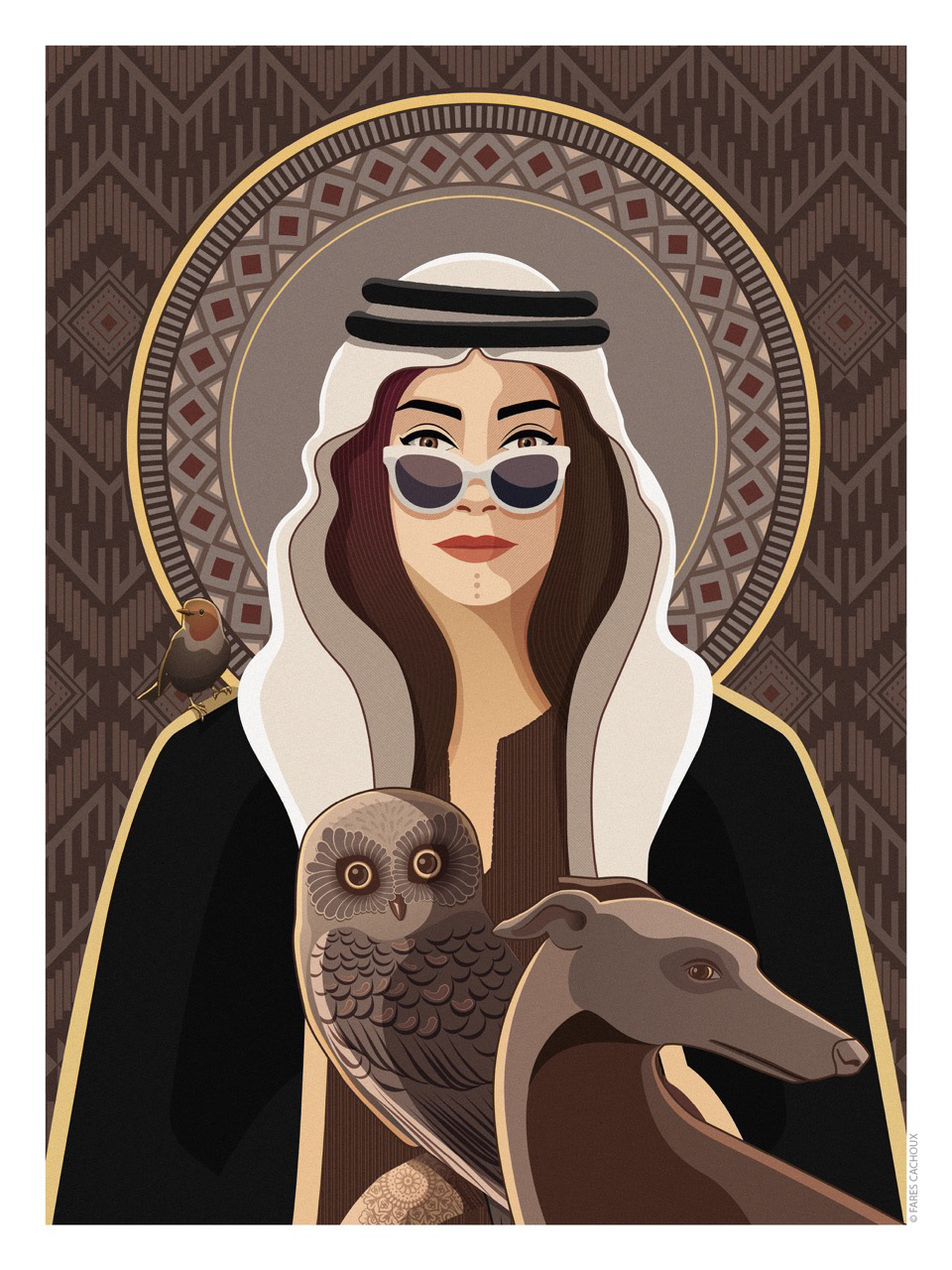
Desert Queen, 2024
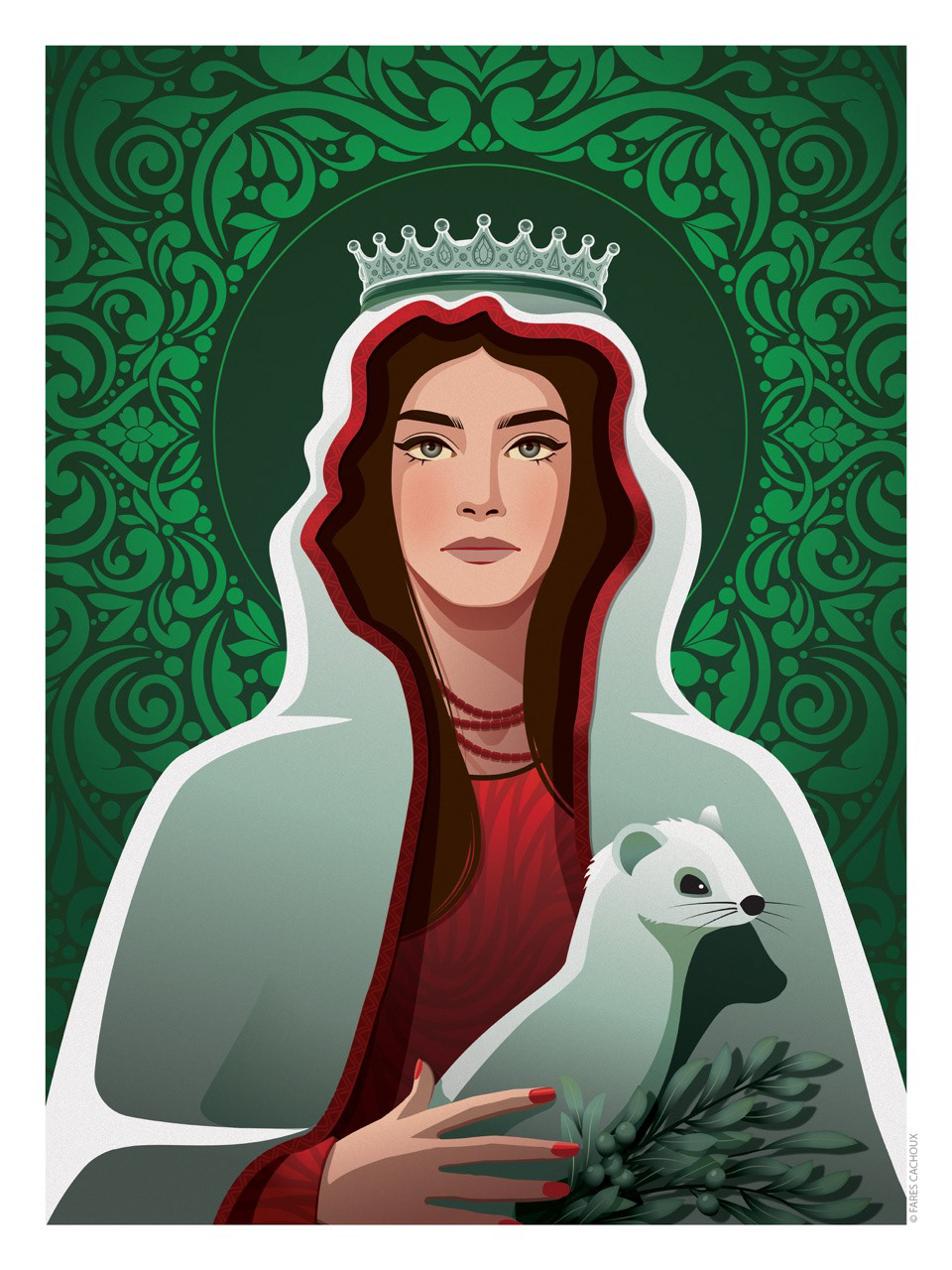
Gaïa Queen, 2025